Marketing @ Mashouf Wellness Center
Visual Design for Campus Life at Mashouf Wellness Center
Personal Case Study
UX/UI Design
iOS Feauture Concept
Role
Graphic Designer
Organization
Mashouf Wellness Center
Location
San Francisco State University
Timeline
Oct. 2022 - Jun 2023
Revisiting the work
This case study revisits the design work I completed during my time at Mashouf. While I no longer have access to all original project files, I’m presenting the final graphics I’ve retained and reflecting on what worked, what didn’t, and how I’d approach these designs today.
Rather than reworking past designs, this section focuses on design decision-making, audience awareness, and growth.
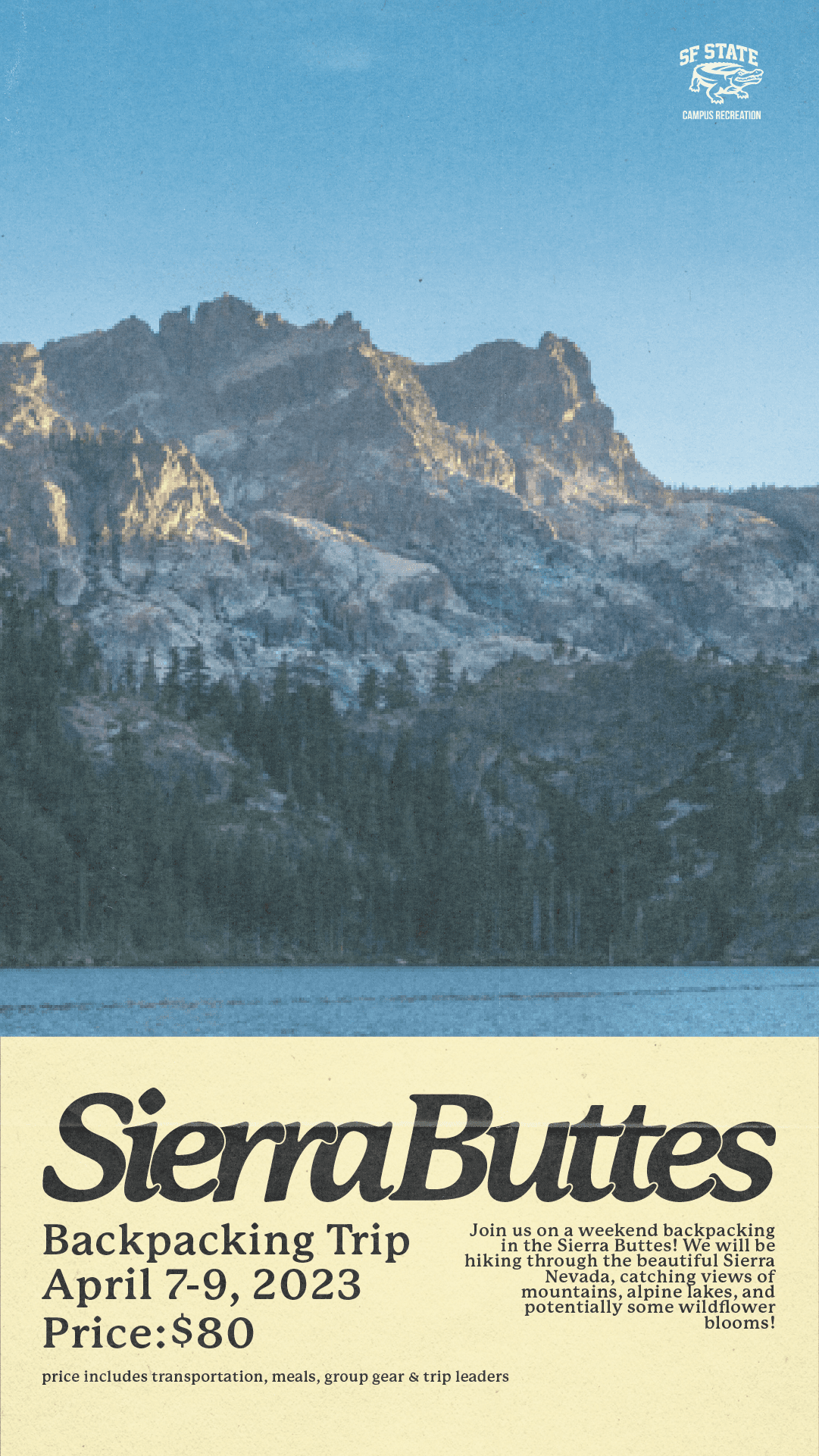
Sierra Butes Backpacking Trip
Platform
Instagram Story / Social Media posts
Purpose
The goal was to promote an upcoming outdoor trip and clearly communicate key logistics like location, dates, and cost.
What Worked?
What worked well here was the tone and visual identity. The imagery, typography, and color palette immediately signal an outdoorsy, handcrafted feel that aligns with the experience being promoted, helping the flyer feel more like an invitation than a generic announcement.
How I'd Approach this Today
I’d rebalance the layout by slightly reducing the image height to give the lower content more breathing room, and tighten the hierarchy so the title, dates, and price are more clearly distinguished and easier to scan at a glance.

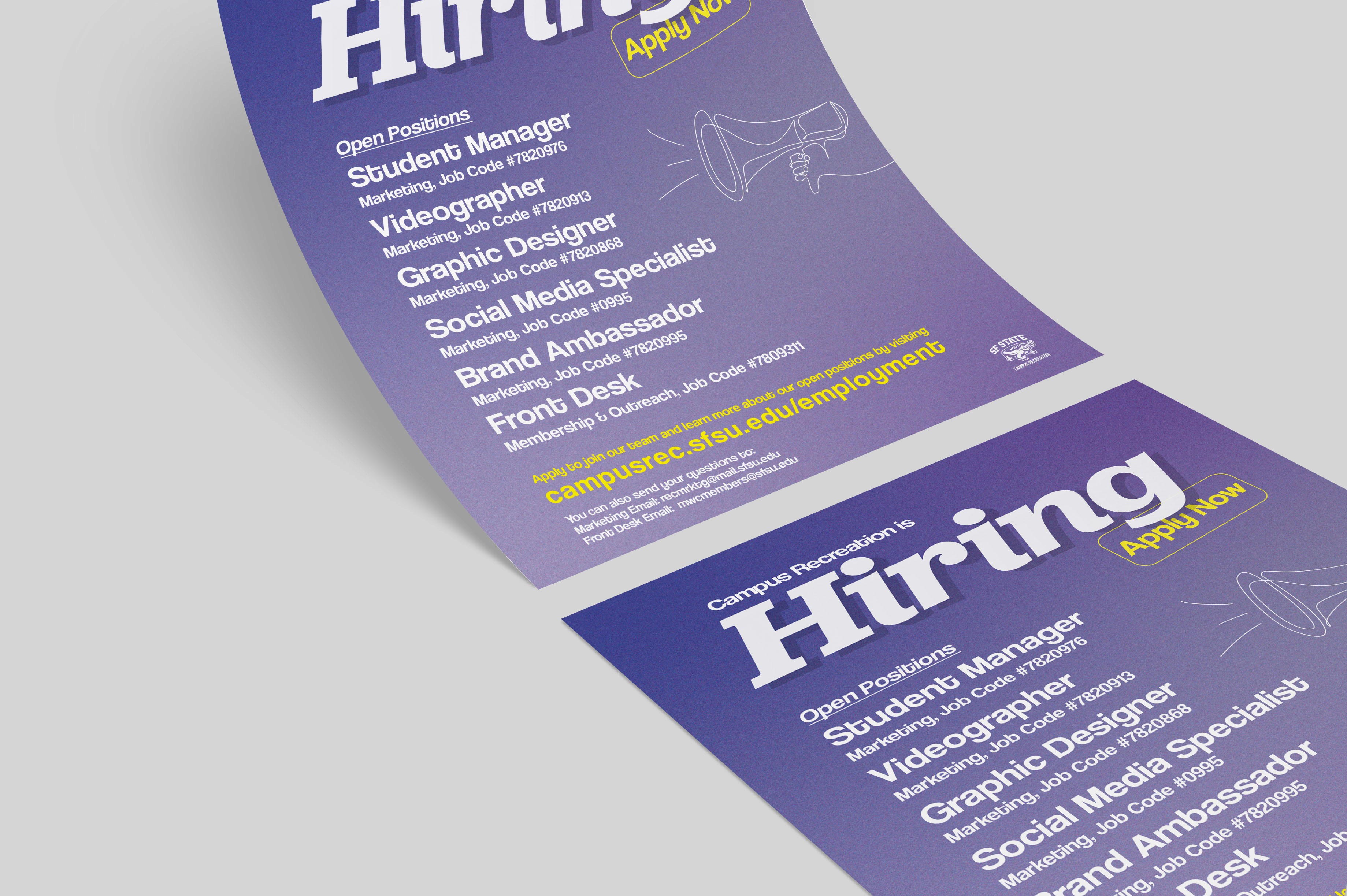
Hiring at MWC!
Platform
Print / Social Media Posts
Purpose
The goal was to highlight open roles at MWC and clearly direct students to apply online.
What Worked?
Multiple, clearly visible CTAs supported different user behaviors, from immediate application to saving information or reaching out with questions.
How I'd Approach this Today
I’d tighten the hierarchy to make the primary action clearer, improve scanability at a distance, and support reuse across future hiring cycles by prioritizing the QR code and grouping roles more intentionally.
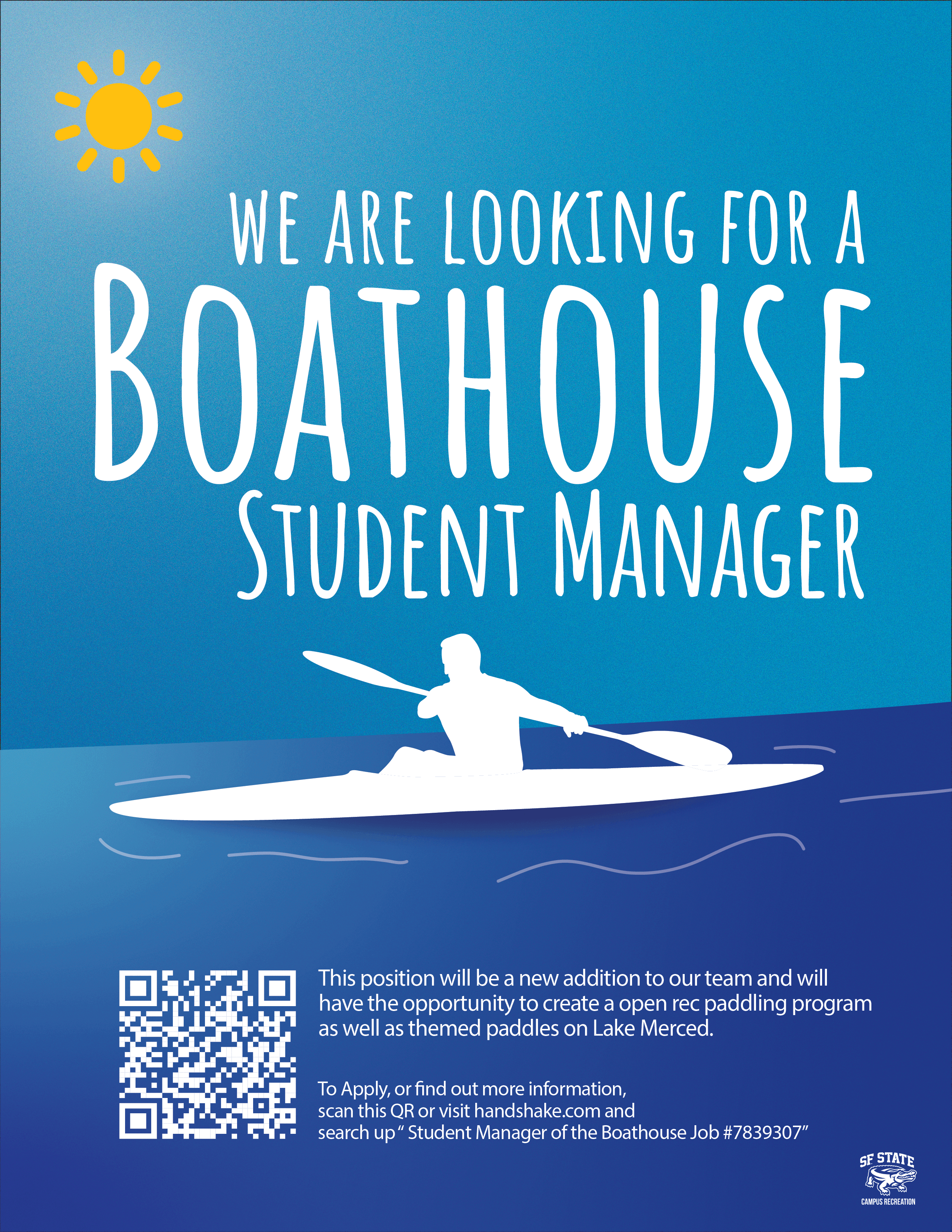
Hiring Flyer #2
Platform
Print / Social Media Posts
Purpose
The goal was to promote a new student manager role at the Boathouse and clearly communicate how to apply, while appealing to students interested in outdoor and water-based activities.
What Worked?
The playful illustration style, color palette, and typography immediately signal an outdoor, summer-oriented role, making the post feel welcoming and easy to understand at a glance.
How I'd Approach this Today
I’d simplify the layout by cutting back on supporting copy and keeping only what’s most relevant, clarify the source by replacing “we” with MWC, and adjust typography and weight so the main headline stands out more clearly

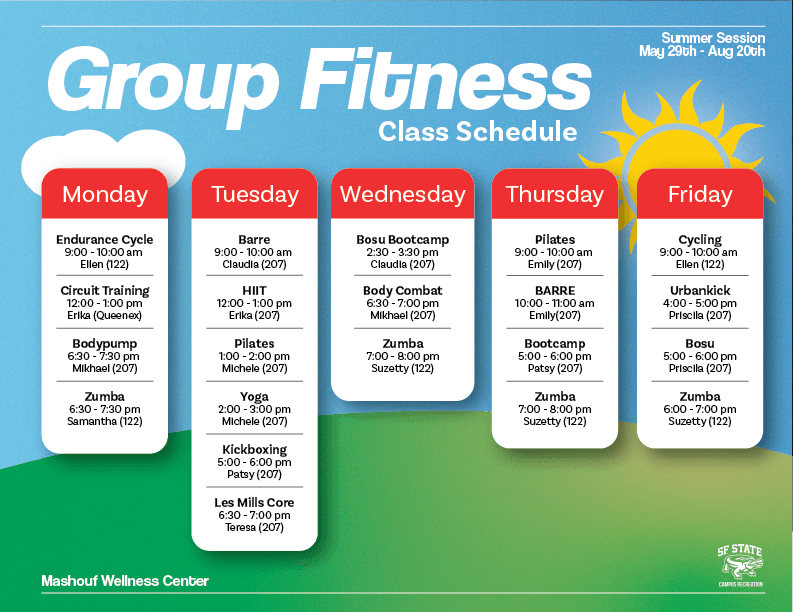
Fitness Class Schedule!
Platform
Purpose
The goal was to clearly communicate the weekly group fitness schedule in a way that’s easy to scan, helping students quickly find classes, times, and instructors at a glance.
What Worked?
The column-based layout organizes the schedule by day, making it predictable and easy to scan. Clear headers, consistent spacing, and strong contrast help users quickly find relevant classes without feeling overwhelmed.
How I'd Approach this Today
I’d reduce visual clutter by increasing contrast between key details like time, instructor, and location, and add a clear path to more information through a link or QR code.
Our Design Stack
Alongside the design work, I’m including a brief look at the tools and platforms I used to create, manage, and ship these assets. This stack supported fast turnarounds, collaboration with the marketing team, and delivery across both digital and print surfaces.

Asana
Used to track design requests, manage timelines, and stay aligned with the marketing team from intake to delivery.
Canva
Adobe Suite
Used for more custom, detailed design work where flexibility and precision were needed beyond templates.
Collaboration & Workflow
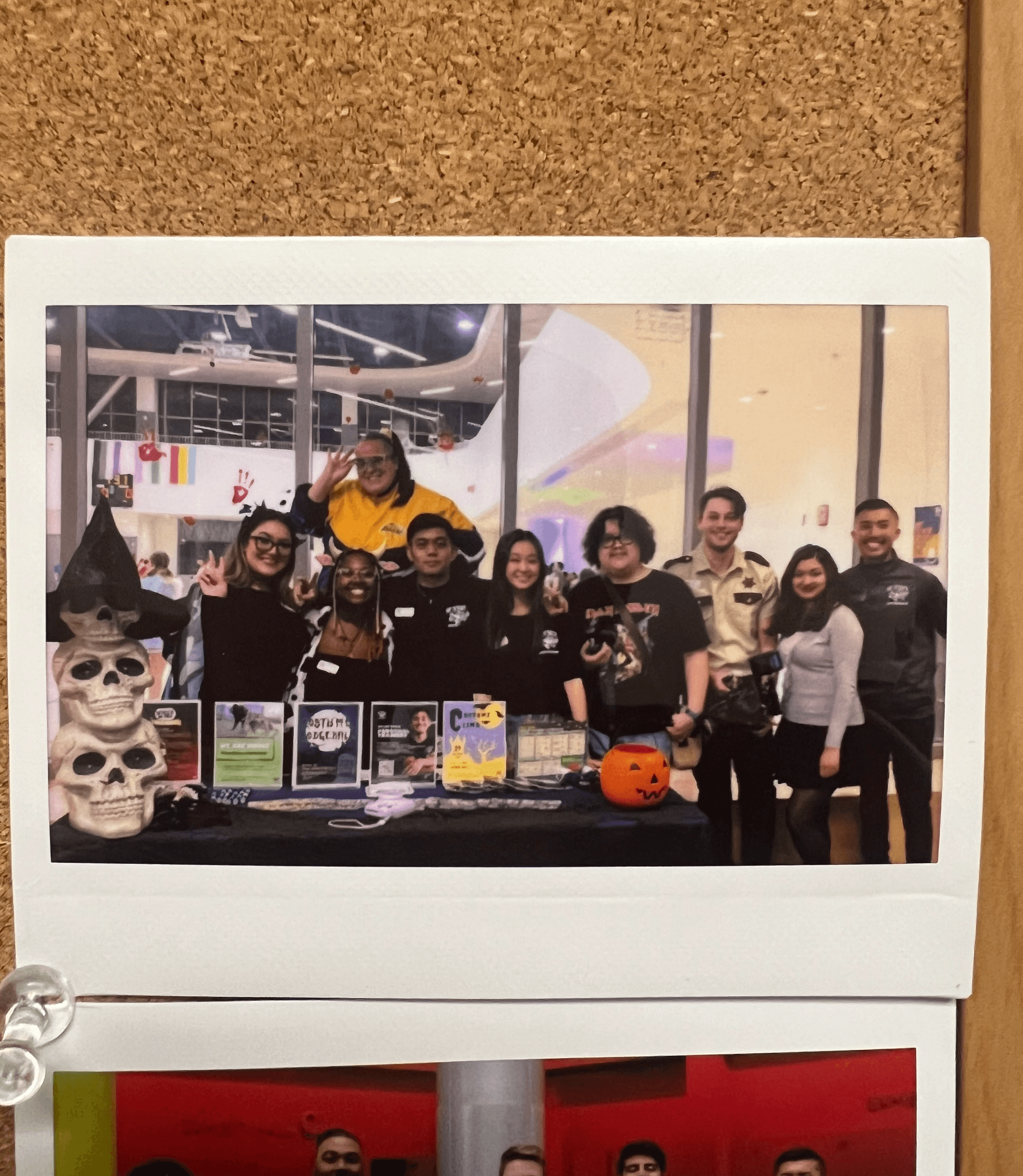
I worked inside a small creative squad ~ designers, photo/video, and social managers ~ which meant fast feedback loops, shared planning, and handoffs across platforms. It taught me how to align visuals, content, and delivery across multiple surfaces and owners.
Reflection, 2 Years Later
From visual craft to clarity-first design
Key takeaway
Clarity isn’t just a design principle anymore. It’s an instinct.
What I see now
Revisiting this work, I’m proud of the visual craft and more aware of how much I’ve grown. This project taught me how critical hierarchy and clarity are when people only have seconds to process information.
How it changed my approach
That realization reshaped how I design today. Layout, hierarchy, and context don’t just make things look organized. They determine whether people understand what they’re seeing and know what to do next. That mindset now guides how I think about interfaces, flows, and communication as a product designer.
Want to talk more about design, process, or growth?
I’m always down to talk design, process, or opportunities.

throughnateseyes
made by nate bautista